
Viterbo: What to See with a Tour Guide
Walk through the streets and squares of Viterbo and discover its thousand-year history with Elena Ronca, a licensed tour guide.

A Walk Through Viterbo: Medieval Neighborhoods, Papal Palaces, Museums and Traditions
Visiting Viterbo means stepping into a city that has preserved its medieval layout remarkably intact. I often take groups through its narrow streets, squares and fountains, and every time I am struck by the fact that here the Middle Ages are not merely a memory: they are still woven into the very fabric of the city, with its peperino stone, quiet courtyards and ancient tower houses.
A Brief History of the City

Viterbo began to take shape between the 11th and 12th centuries, when it became an increasingly important center for trade, pilgrims and religious power. In the 13th century, the city experienced its golden age: the popes chose it as a political refuge, and Viterbo grew and flourished, gaining new walls, churches, palaces and an urban fabric that can still be easily appreciated today. The 14th century brought wars and difficulties, but the medieval structure remained, and this is precisely what makes Viterbo so unique today.
The San Pellegrino district is perhaps the most iconic image of Viterbo: arches, external stairways, loggias, tower houses and small squares where time seems to have stood still. Walking here feels like stepping into a history book.
Not far away stand the Cathedral of San Lorenzo and the Papal Palace. The large, bright square is one of the most picturesque spots in Viterbo.
The Museums of Viterbo
Viterbo has a network of museums that allows visitors to explore the city and its surrounding area from different perspectives. The Museum of the Sodalizio dei Facchini di Santa Rosa, in the San Pellegrino district, tells the story of the famous Macchina di Santa Rosa, with historical models, drawings and documents illustrating a tradition that is unique in the world.
The National Archaeological Museum , housed in the Rocca Albornoz, displays artifacts dating from the Etruscan to the Roman periods, offering a comprehensive overview of the long history of Tuscia.
Also worth visiting are the Civic Museum in Palazzo dei Priori, with its frescoes and paintings—including works by Sebastiano del Piombo—and theColle del Duomo Museum,which houses sacred objects as well as works of art, paintings and sculptures.
Finally, the Tuscia Ceramics Museumoffers an insight into the history of this ancient craft, featuring works from some of the most important workshops in Viterbo and the surrounding province dating back to the 13th century.

The Fountains of Viterbo

A symbol of the city’s identity, peperino-stone fountains can be found in almost every square. Some are authentic medieval and Renaissance masterpieces—small water structures that tell the story of everyday life in times gone by.
Among the best known is the Fontana del Sepale in Piazza Fontana Grande, dating back to the 12th century and featuring richly carved peperino details. Equally fascinating are the Fountain of Piazza della Morte, one of the oldest in the city, and the many fountains found throughout the narrow streets and small medieval squares, often hidden from tourists but much loved by the people of Viterbo.
Highlights
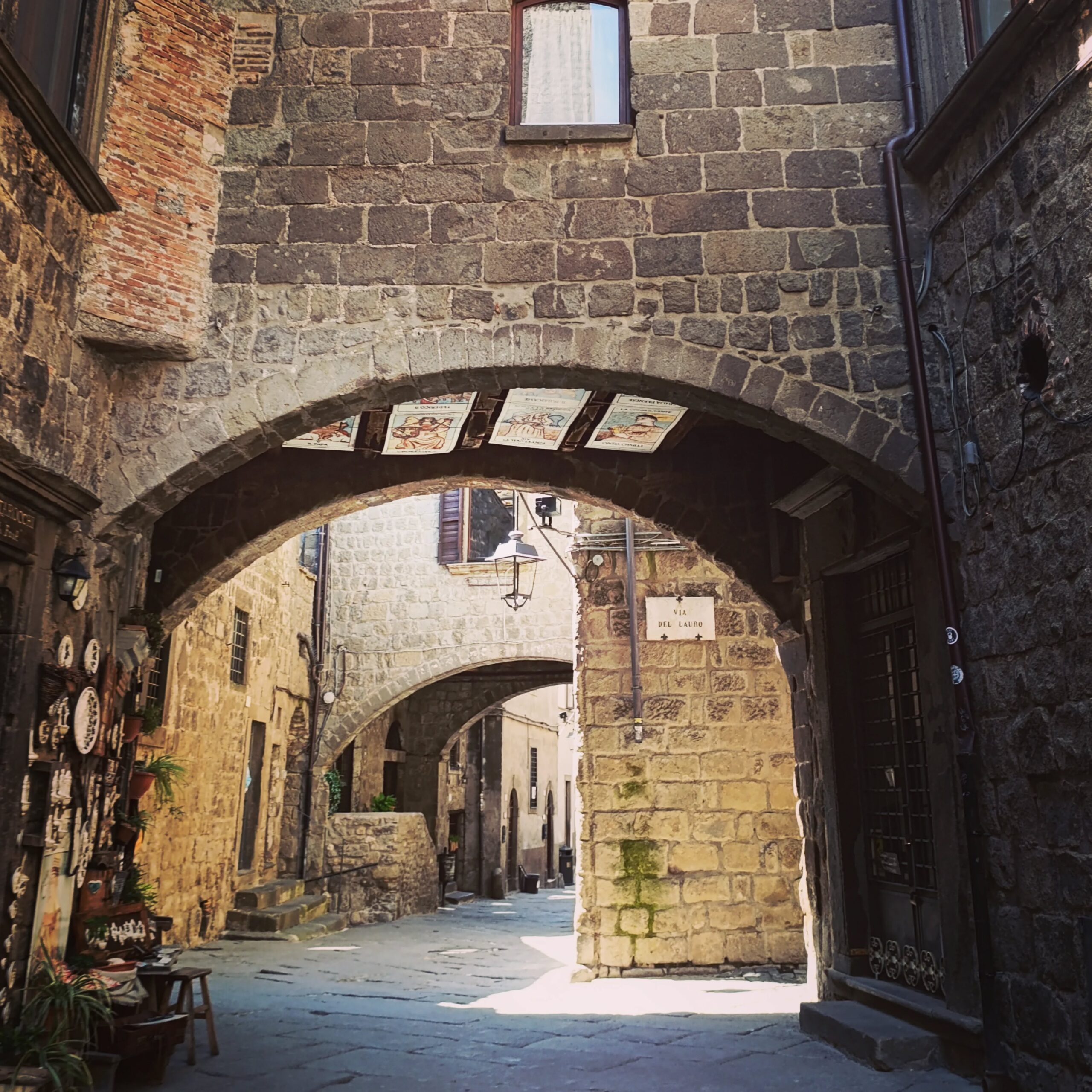
San Pellegrino District
The medieval heart of Viterbo, where arches, external stairways, loggias, and tower houses line narrow streets and small squares. It is one of the best-preserved medieval districts in Europe and the perfect place to experience the atmosphere of 13th-century Viterbo.

Papal Palace
The symbol of papal Viterbo and one of the city’s most important buildings. Here, in the 13th century, one of the most significant moments in the history of the medieval Church took place. The imposing Hall of the Conclave, with its austere architecture, still bears witness to the important role Viterbo played in medieval Europe.
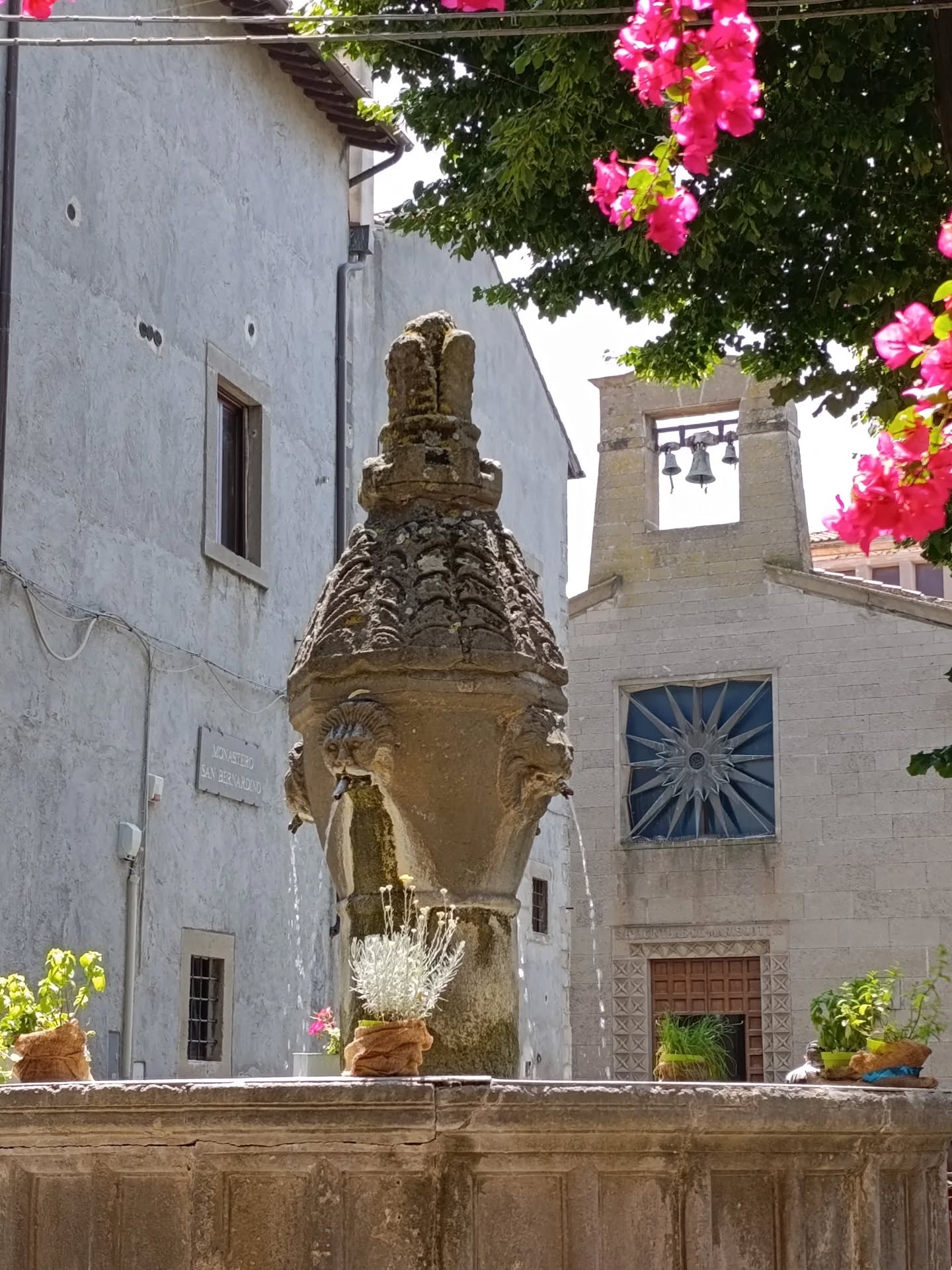
The Fountain of Piazza della Morte
One of the oldest and most evocative fountains in Viterbo. Made of peperino stone, with its simple and austere design, it tells the story of the everyday relationship between the medieval city and water.
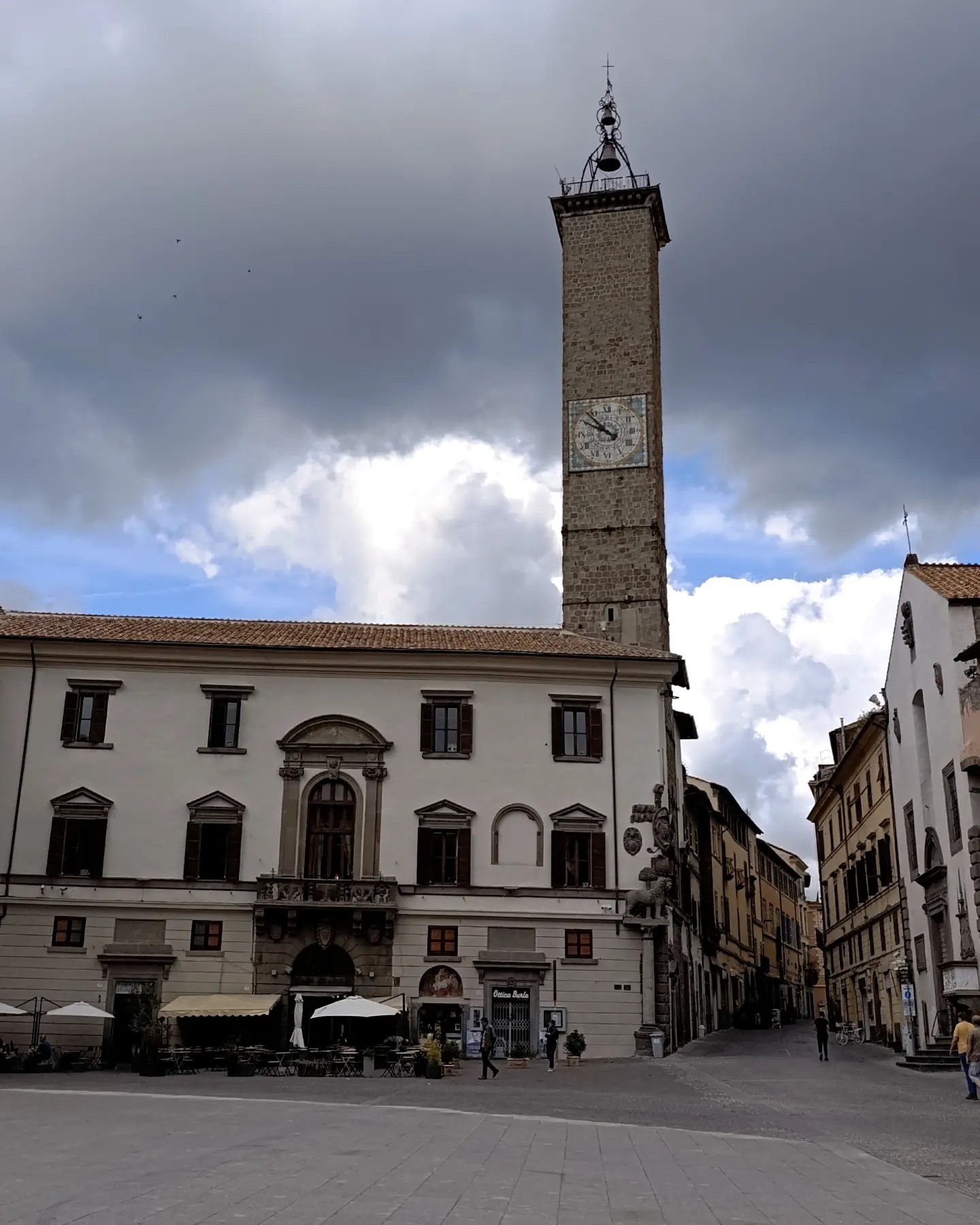
Palazzo dei Priori
Overlooking the beautiful Piazza del Plebiscito, Palazzo dei Priori remains the institutional heart of the city. Its rooms are adorned with frescoes and works of art that tell the story of Viterbo and its surrounding area, in a continuous dialogue between the Middle Ages and the Renaissance.

The City Walls
The historic center is still surrounded by an almost completely preserved medieval wall, with monumental gates and walkways that bring the fortified medieval city of Viterbo to life.

Santa Maria Nuova
One of the oldest and most atmospheric churches in the city, featuring a simple Romanesque structure and an interior decorated with medieval and Renaissance frescoes.

The Thermal Baths of Viterbo
The thermal baths of Viterbo, already mentioned by Dante in the Divine Comedy, have been one of the defining features of the city since ancient times—and remain so today.

The Cathedral Portal
Created by Roberto Joppolo in 2009, the portal tells the story of the Diocese of Viterbo. The central portal recalls the papal conclaves, while the two side doors recount the history of the historic dioceses of Tuscia.

The Macchina di Santa Rosa
On September 3, Viterbo celebrates its most spectacular festival: the Macchina di Santa Rosa, a tower that can rise more than 30 meters high and is carried through the city on the shoulders of one hundred Facchini. It is a tradition found nowhere else in the world.

Castel d’Asso
Just a few minutes from the city lies the famous Etruscan rock-cut necropolis, surrounded by the natural beauty of the valley. It is one of the most fascinating places to explore the long history of the area.
Plan Your Visit

Accessibility
Partially accessible route for visitors with mobility impairments.

Duration
Half a day or a full day

How to Get There
Viterbo is easily accessible via the SS2 Cassia and the SS675 Umbro-Laziale expressway.
It is also connected to Rome by rail.

Additional Costs
Museum admission tickets (optional)
Papal Palace admission ticket (optional)
Would you like to visit Viterbo with a tour guide?
Discover more places
-

Marta and Capodimonte: The Hidden Gems of Lake Bolsena
Marta and Capodimonte are two villages overlooking Lake Bolsena, side by side yet remarkably different. One is medieval, the other dares to the Renaissance, both connected by breathtaking views and an authentic relationship with the lake that is still very much alive today.
-

Sovana: A Journey Through Time from the Etruscans to the Middle Ages
Nel cuore della Maremma toscana, incastonata fra profonde forre di tufo, Sovana è un piccolo gioiello che racchiude millenni di storia. Camminando tra le sue vie, si percepisce un’atmosfera sospesa nel tempo: gli Etruschi, i conti Aldobrandeschi, i potenti vescovi e infine i secoli di abbandono hanno lasciato qui tracce profonde e suggestive.
-

Civita di Bagnoregio. Why the dying town?
Civita di Bagnoregio nasce su uno sperone di tufo, come Orvieto e Pitigliano, generato dalle eruzioni del sistema vulcanico Volsino – quello che poi portò alla formazione del lago di Bolsena, che è il lago di origine vulcanica più grande d’Europa. Però il tufo qui è molto sottile, deposto su uno strato di argille marine,…
-

Tuscania and the Masterpieces of the Middle Ages
Scopri Tuscania e le sue basiliche medievali, solitarie testimoni di un antico passato, il centro storico e il territorio circostante.
-

Orvieto and the Splendor of the Middle Ages
Orvieto è una delle cittadine più affascinanti dell’Umbria, arroccata sulla sommità di una rupe di tufo. Domina la valle con il suo profilo unico: le guglie del Duomo, visibili da lontano, si elevano maestose sopra gli altri edifici.
-

Civita di Bagnoregio, vivi una giornata nella città che muore
Un borgo sospeso nel vuoto, raggiungibile solo a piedi attraverso un ponte che collega questo suggestivo sperone di tufo al resto del mondo.
